Before we begin, please note that everything in this article is based on my personal experience renewing a work visa. Procedures and required documents may differ depending on your situation, so please make sure to check the official immigration website for the most accurate information.
I recently had to renew my work visa again so I could continue working and living in Japan. It wasn’t the first time I had done this, so I was much calmer and more confident than the last time I did it last year. It’s not an extremely complicated process, but it does take time to gather documents from yourself and, in some cases, from your company, so it can be a little stressful. In this article, I want to share my experience and give a few tips that I hope will help you get through the process more smoothly.
My Story with Visas in Japan
When I arrived in Japan, I had a student visa that the Japanese language school helped me to obtain. After graduating from the Japanese language school, I decided to look for a job in Japan, so I had to change my visa in order to stay in Japan for six months while looking for work. After finding a job at a Japanese company,the company helped prepare the necessary paperwork and submitted the application on my behalf.After a few months, there it was, my work visa that allowed me to start working in Japan!
When almost a year had passed, I found that I had to renew my visa, and I wasn’t quite sure how to do it; everyone told me something different. In the end, I managed to do it after a bit of research and asking the staff at my company. Let’s take a look at some of the tips I recommend, based on my own experience.
Tips!
Prepare your documents well in advance, especially if you need additional documentation from your company. It is also possible to renew your visa up to three months before it expires, so the sooner the better.
In my experience — and in the experience of many people I’ve talked to — the Tachikawa office tends to be less crowded than Shinagawa.As far as I understand, it’s mainly residents of Tokyo, Yamanashi, and Sagamihara(Kanagawa) who can go to this office. I think I remember reading that some specific procedures cannot be done there, but for renewing at least a work visa, there is no problem. Whether you are submitting documents or picking up your new residence card, you don’t have to wait too long.
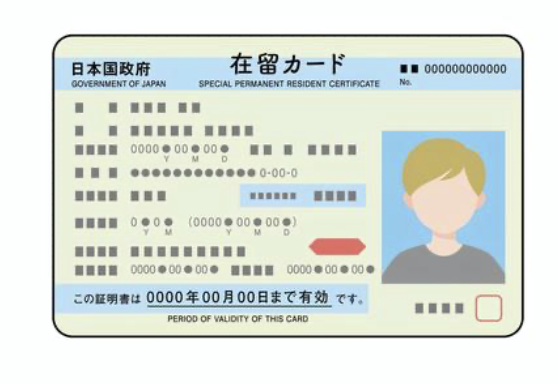
When you arrive at immigration and inform them that you are there to renew your visa, they will first check that you have all the necessary documents. If everything is correct, they will give you a postcard on which you must write your address and name. Make sure you do not make any mistakes with this information, as this postcard will be your notification that your new residence card is ready to be collected. If the address is incorrect, you may not receive the postcard. Normally, the staff will also confirm that the address is correct, but it is best not to make any mistakes from the outset.
Do not be surprised if you receive a letter from immigration requesting additional documentation that was not on their website. When this happened to me, I panicked, but it‘s fine. Simply gather the documentation and send it by post to immigration.
In relation to the above, if you were asked to provide additional documentation last year, it can be helpful to submit that documentation again, as immigration sometimes asks for the same materials every year.
If you have any questions or concerns, you can call the immigration office you are visiting for assistance.
Go early in the morning. Both offices(Tachikawa and Shinagawa) are open from 9 a.m. to 4 p.m., only on working days. When I last renewed my visa, I arrived at the Tachikawa office at 8:50 a.m. to submit my documents, and at a similar time to collect my visa. On both occasions, I waited less than 30 minutes. When collecting my visa in Shinagawa, I made the mistake of going at around 11 a.m., so I had to wait about four hours.
Because the waiting time can vary, it’s a good idea to bring something you enjoy—maybe a book, your headphones, or a Sudoku puzzle.
In summary:
With this article, I simply want to serve as a guide as someone who has gone through the process, but this is only my experience. Please consult the immigration website or gather information from acquaintances, your own company, or other sources to verify what the process is like in your case.
For the most accurate and up-to-date information, please refer to the official immigration website: https://www.moj.go.jp/isa/
Carmen Alvarez
Carmen grew up in a city in southern Spain. After graduating from university, she decided to move to Tokyo to study Japanese. She enjoys walking the streets of Japan, discovering new places and trying different Japanese dishes.