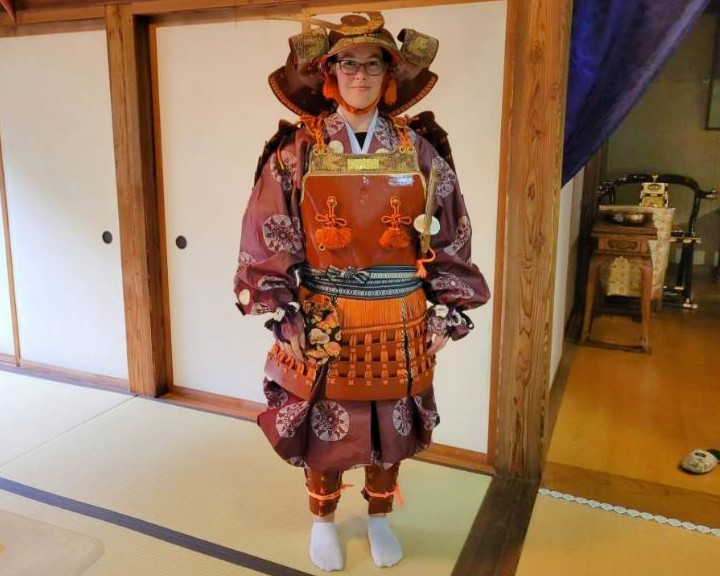
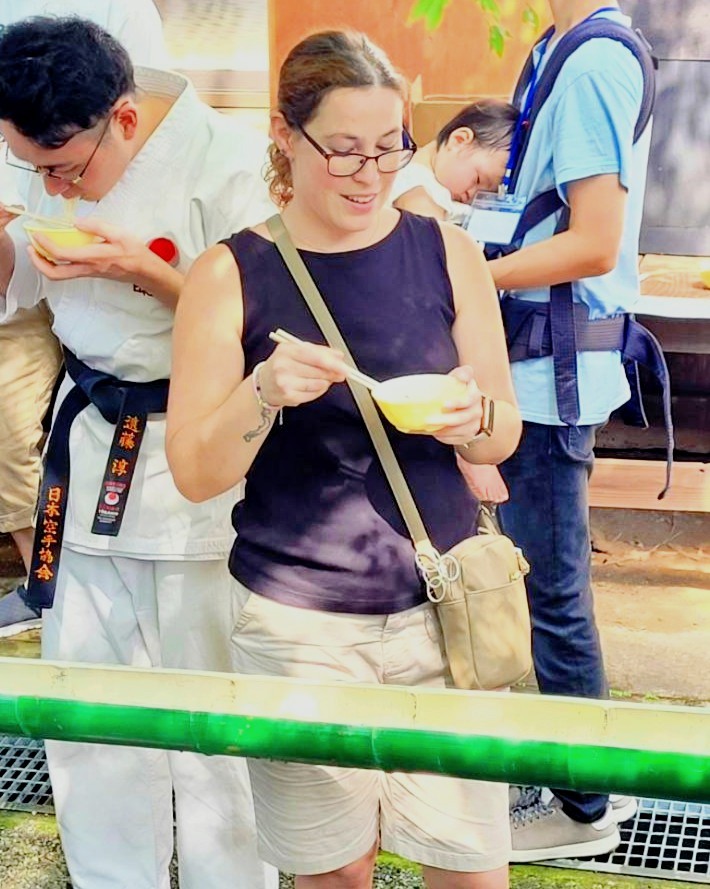
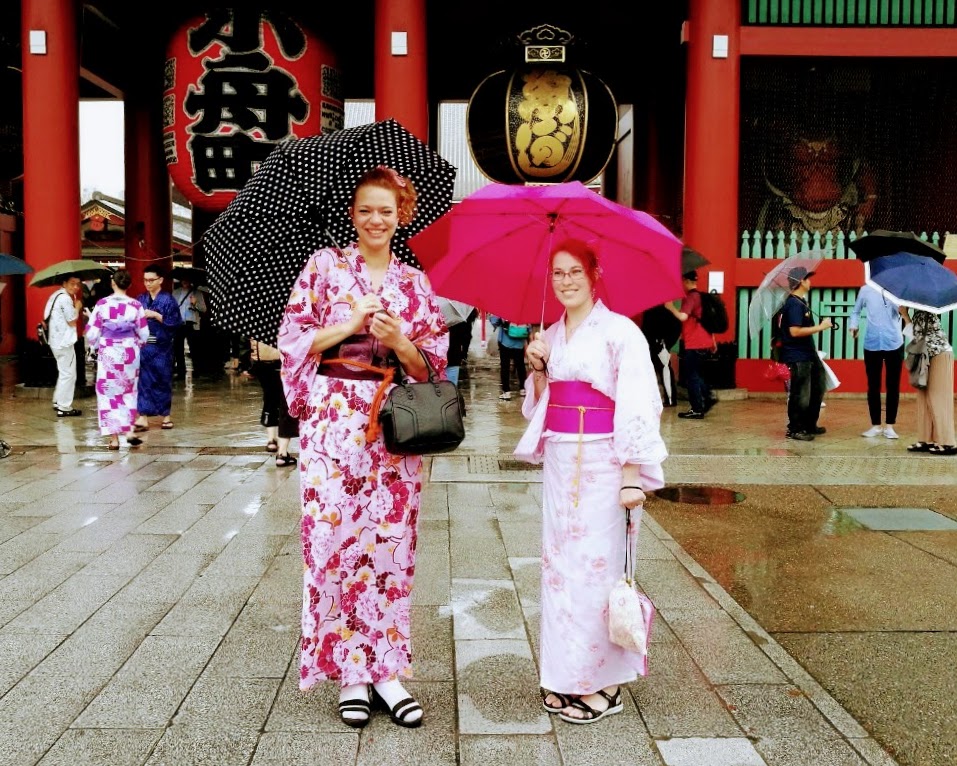
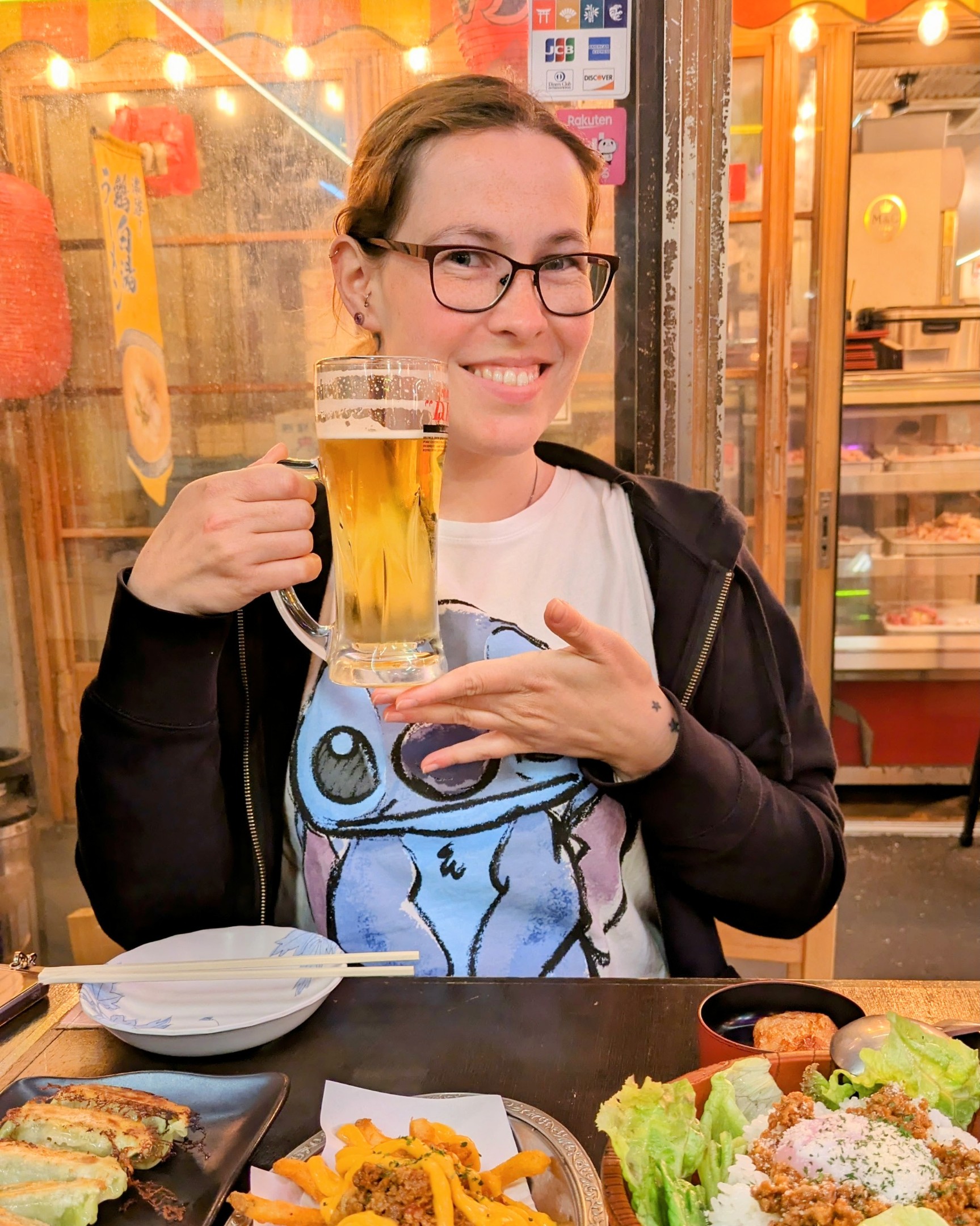
Interview: A German student with a passion for Japan
WORK’IN JAPAN
29.01.2026
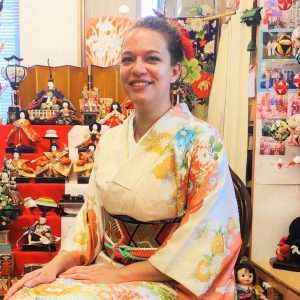
What is it like to work in Japan? I started interviewing people who work in restaurants to share their personal experiences. The next person in this series is Caro, one of my first and dearest friends in Japan. She’s one of the hardest working people that I’ve met, as she always has many part-time jobs, while attending school every day.
Can you please introduce yourself and explain how you became so interested in Japan?
I’m Carola, but everyone calls me Caro, and I’m from a small town in Bavaria, Germany. My dream was to live in Japan, because since I was a child, I was interested in Japanese culture. My dad bought me my first Sailor Moon manga, and my mom would always watch anime together after I came home from school. We watched Sailor Moon, Pokémon, Naruto, and some other anime that were shown on German TV back then. Therefore, there wasn’t a specific moment in which I decided to visit Japan; that longing to come here has always been there.
How did you eventually move here?
After finally visiting Japan several times, I moved to Saitama for 1 year, from 2019 to 2020, on a working holiday visa. It was tough because I had to find jobs and work hard, but I had an amazing time, and I wanted to stay in Japan even longer. I left after 1 year, exactly when the pandemic had just started, so during the 2 years of the pandemic, I lived in Germany.
I came back in 2022 on a student visa to study Japanese at a language school in Tokyo, and for the past 1,5 years I’ve been attending a vocational school. Now I’m still very happy to live here, and I will soon reach my 5-year anniversary of living in Japan.
Can you tell me more about the jobs that you’ve had in Japan so far?
My first job was at a German restaurant in Roppongi. When I came back in 2022, I worked at the same restaurant again. I loved working there, and I even got a tattoo on my leg with a reference to the restaurant’s name. The staff felt like family, everyone was very nice, and always had each other’s backs. The food was amazing and very authentic as well! Unfortunately, the restaurant closed down a few years ago, after the owner, who was also the chef, and his wife, who was the hostess, retired.
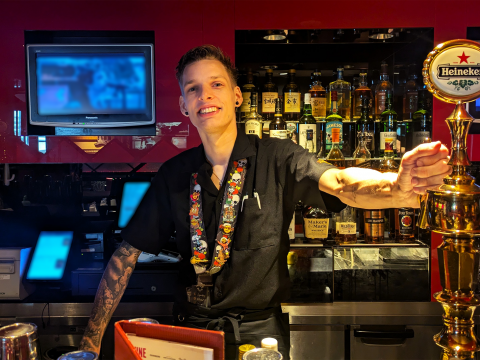
After that, I’ve also worked at a well-known American chain restaurant, which serves American comfort food and is a popular place for celebrations and watching sports games. Now, I still teach English and German, and do babysitting.
What are some differences between working in Japan and working in Germany?
In Germany, I’ve also had different jobs. My most recent job there was at a restaurant, where I started working during the pandemic. There aren’t many differences for me, but because I worked in a very small town, everyone knew each other, and all the customers were regulars. Of course, that creates a very different atmosphere and relationship between the staff and the customers than when you constantly get new customers, and you are expected to always act professionally and talk to people in a more formal way.
In Germany, we could joke with customers freely, and there was no pressure or strict customer service rules. In Japan, there are generally more rules, but I’ve been lucky to work at two restaurants where I still felt comfortable casually talking with customers and being myself.
How did you manage to work as a waiter, while you’re not fluent in Japanese?
It was sometimes difficult and very frustrating, because I’ve studied Japanese for years now, and I’m still not fluent. But I do what I can, and I’m grateful when people notice the effort I put into it, reminding myself that after all, I’m still making progress. Luckily, at work, there was less pressure on me and the way I behaved because I’m a foreigner. Of course, I was always as polite as possible, and I always apologized to customers in advance that my Japanese wasn’t very good.
In the end, this never caused any issues. Many Japanese customers would study English or German and liked the opportunity to practice speaking with me. Often, I would also help foreign customers, who usually enjoyed talking to me in English, because as tourists they wouldn’t meet many foreigners who live here, and I would also meet some Germans sometimes.
So it sounds like you could offer customers an experience that your coworkers couldn’t have.
Exactly. Most people, both staff and customers, were very forgiving towards my imperfect Japanese. Also, because I obviously look like a foreigner, nobody really expects me to speak keigo or address them in a‘typical’ Japanese way. Especially the American restaurant would give me tables with foreign customers. Most of the Japanese staff members didn’t speak English, so having me was often an advantage for them. I truly hope that more companies will realize that hiring foreigners can be a real asset in this way.
What’s your dream, and do you plan to stay in Japan?
My dream is to open my own German nursery school in Tokyo. That’s why I’m studying Childcare at a vocational school now.
I want to stay in Japan because, for me personally, it feels easier to live here than in Germany. In my hometown of Landshut, I can’t afford my own apartment, I need a car to get anywhere, there are no vending machines or convenience stores, and shops and supermarkets close early. Traveling by train to nearby cities like Munich or Regensburg is also very expensive.
Here, especially in Tokyo, of course, you can go anywhere by train, it’s affordable, and there are so many opportunities and exciting things to do. Of course, Japan isn’t perfect either; no country is. But I hope that I can stay here for a long time, and as I’ve done so far, I’m willing to work hard for it.
Mietta Varszegi
Mietta grew up in the Netherlands and moved to Japan in 2019 to work as an English teacher. Now, she has 3 different jobs, explores Tokyo on days off and takes trips around Japan whenever she can. But everywhere in Japan, the goal is the same: visit as many shrines, castles and parks as possible and eat everything!