Mochi (rice cake) and the Japanese New Year period go hand in hand. As the year draws to a close, it is customary in Japan to display a special mochi called kagami mochi. We also traditionally hold a mochitsuki(mochi pounding) event right before the New Year to prepare the mochi we will eat at the beginning of the year. Mochi is incredibly versatile! It is wonderful when sweetened and eaten as a dessert, and equally delicious when seasoned savory and enjoyed as part of a meal.
In this article, I’d like to introduce why we display kagami mochi for the New Year, the classic ways Japanese people eat mochi, and my own personal favorite way to enjoy it!
What is Kagami Mochi?
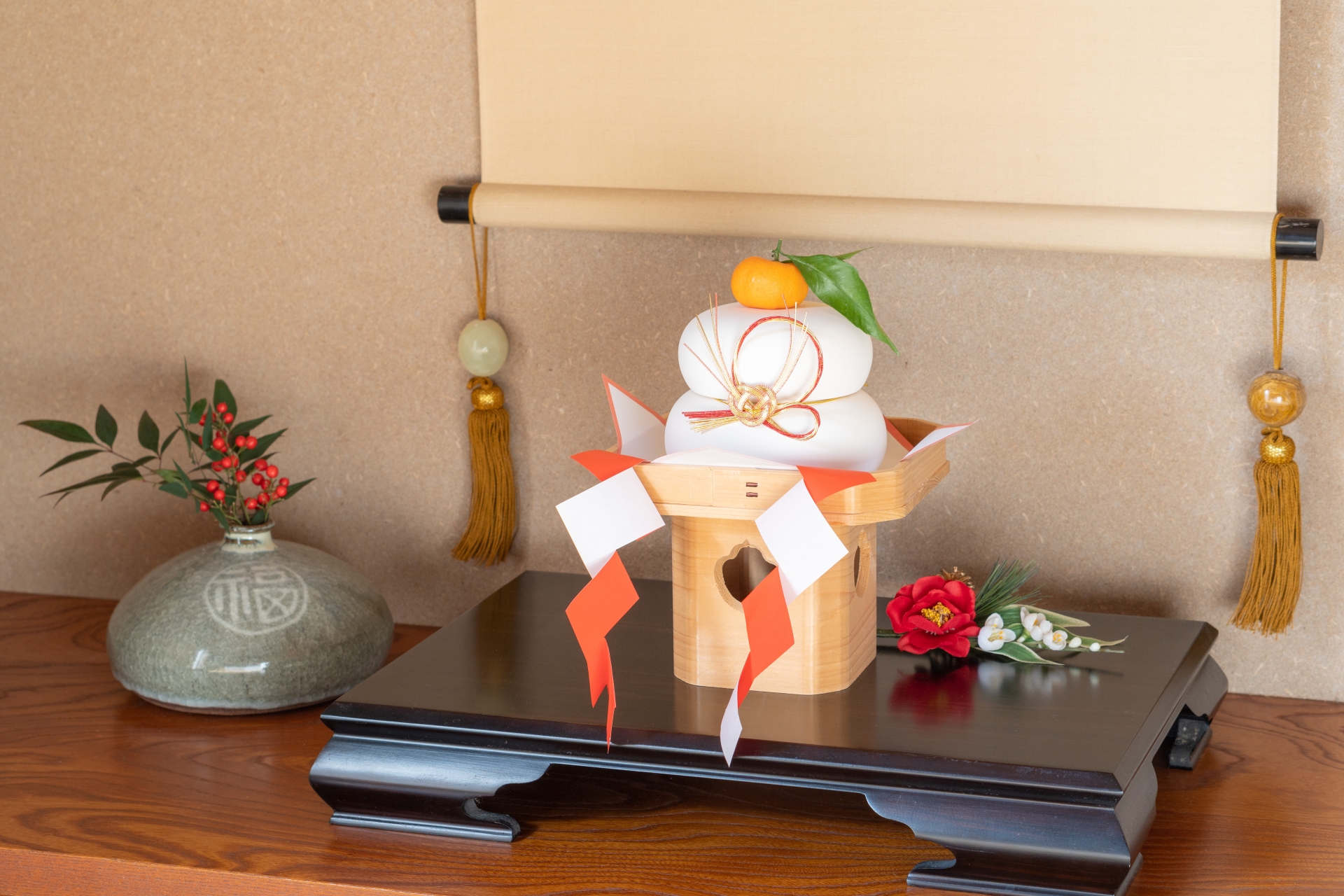
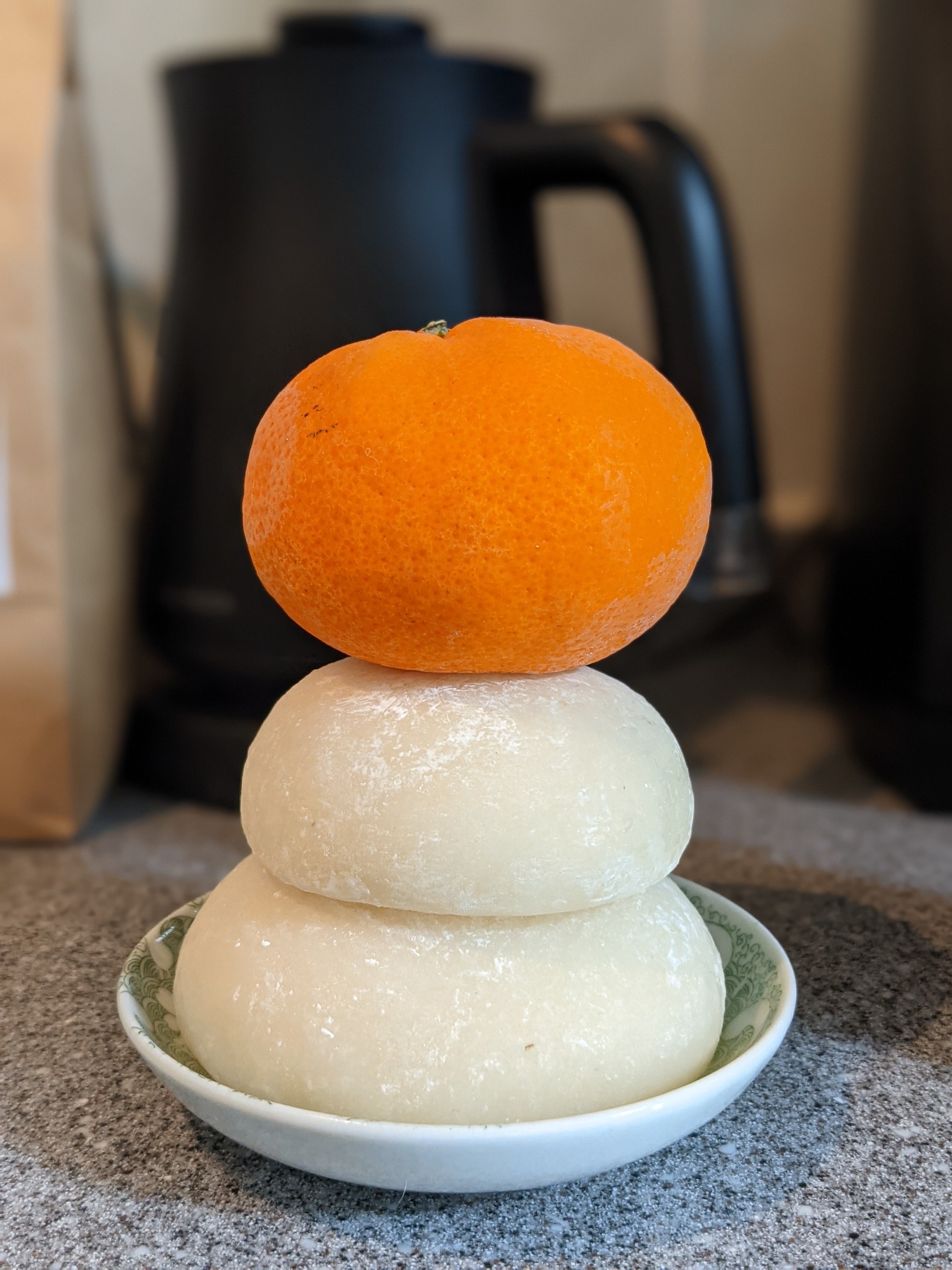
The appearance of kagami mochi is very distinctive: it consists of two round mochi discs stacked on top of each other, usually topped with an orange called daidai. It is traditionally displayed around December 28th at the entrance or in the tokonoma(alcove) of homes. You will see many supermarkets selling various sizes of Kagami Mochi during this time.
The reason we display it is that it serves as a vessel and an offering to the Toshigami-sama, the God of the New Year. The round shape of the mochi represents the ancient divine mirror, the sun, and the moon. Stacking the round mochi symbolizes the“piling up of good fortune” and“passing the years harmoniously.”
Furthermore, on January 11th, we perform kagami biraki(Mirror Opening), where we eat the sacred mochi to wish for good health and protection from illness throughout the year.
The Year-End Tradition: Mochitsuki
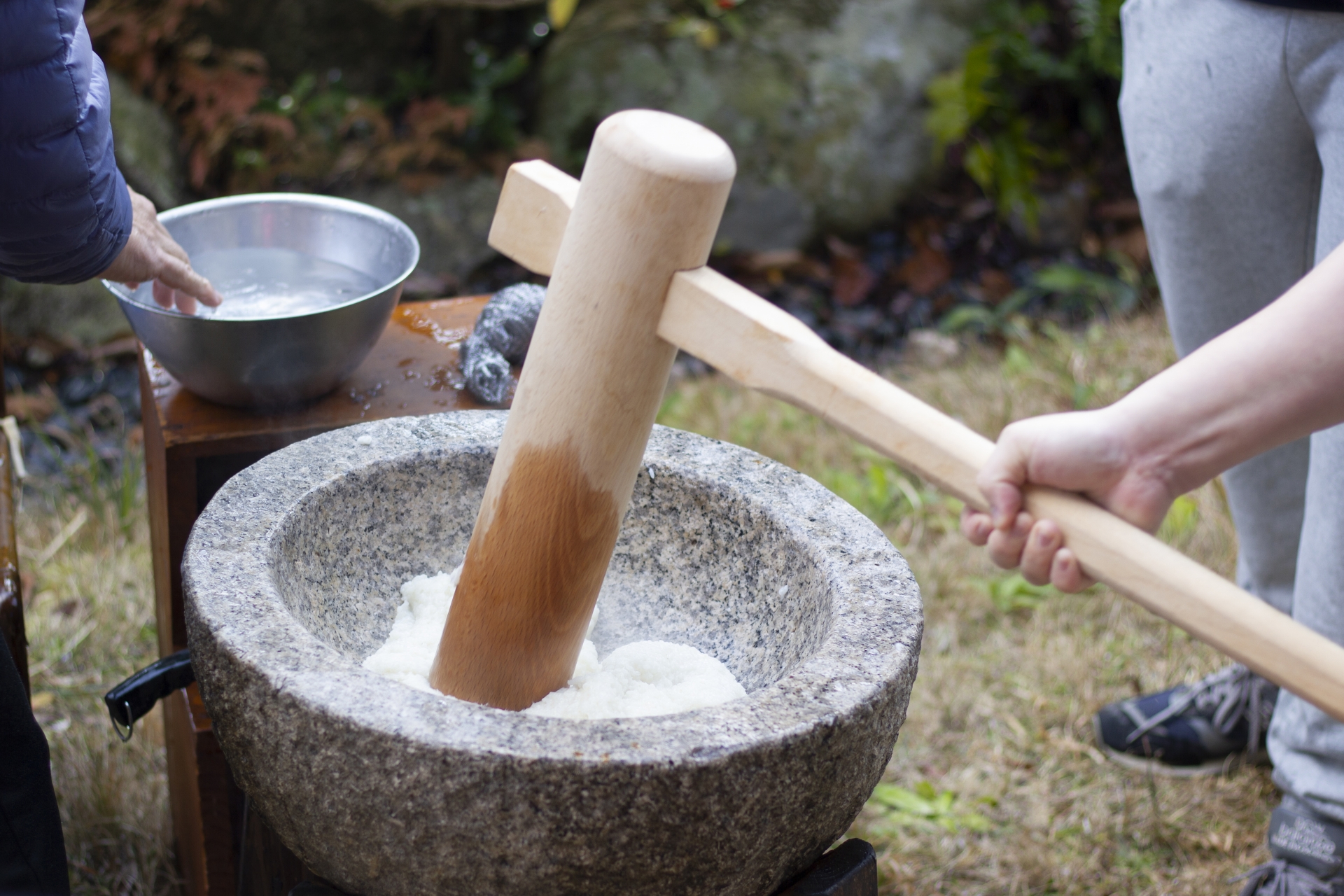
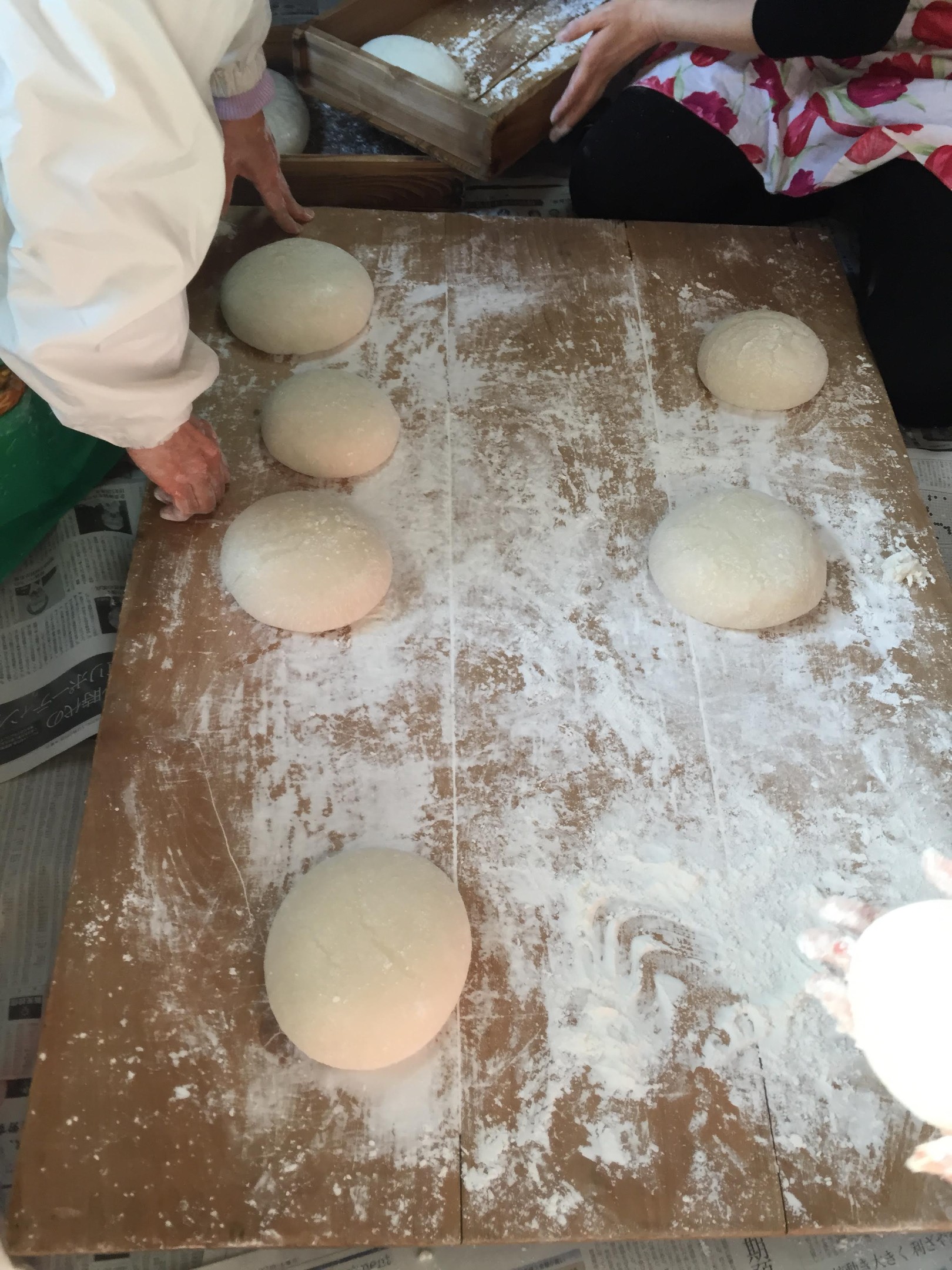
As the year-end approaches, there is a tradition of making mochi, known as mochitsuki(mochi pounding). My relatives have been farmers for generations—my uncle is the 16th generation! Every year, relatives and neighbors gather at the end of December to make mochi from two bales(about 120 kg) of sticky rice. I used to go and help out whenever I could!
The fresh mochi is then used for the kagami mochi display or bagged for preservation. However, the best part of mochitsuki is at the end, when we all share the freshly made mochi together. Freshly pounded mochi is incredibly soft, truly delicious, and the absolute best!
Classic ways to eat mochi
Sweet Mochi(Desserts)
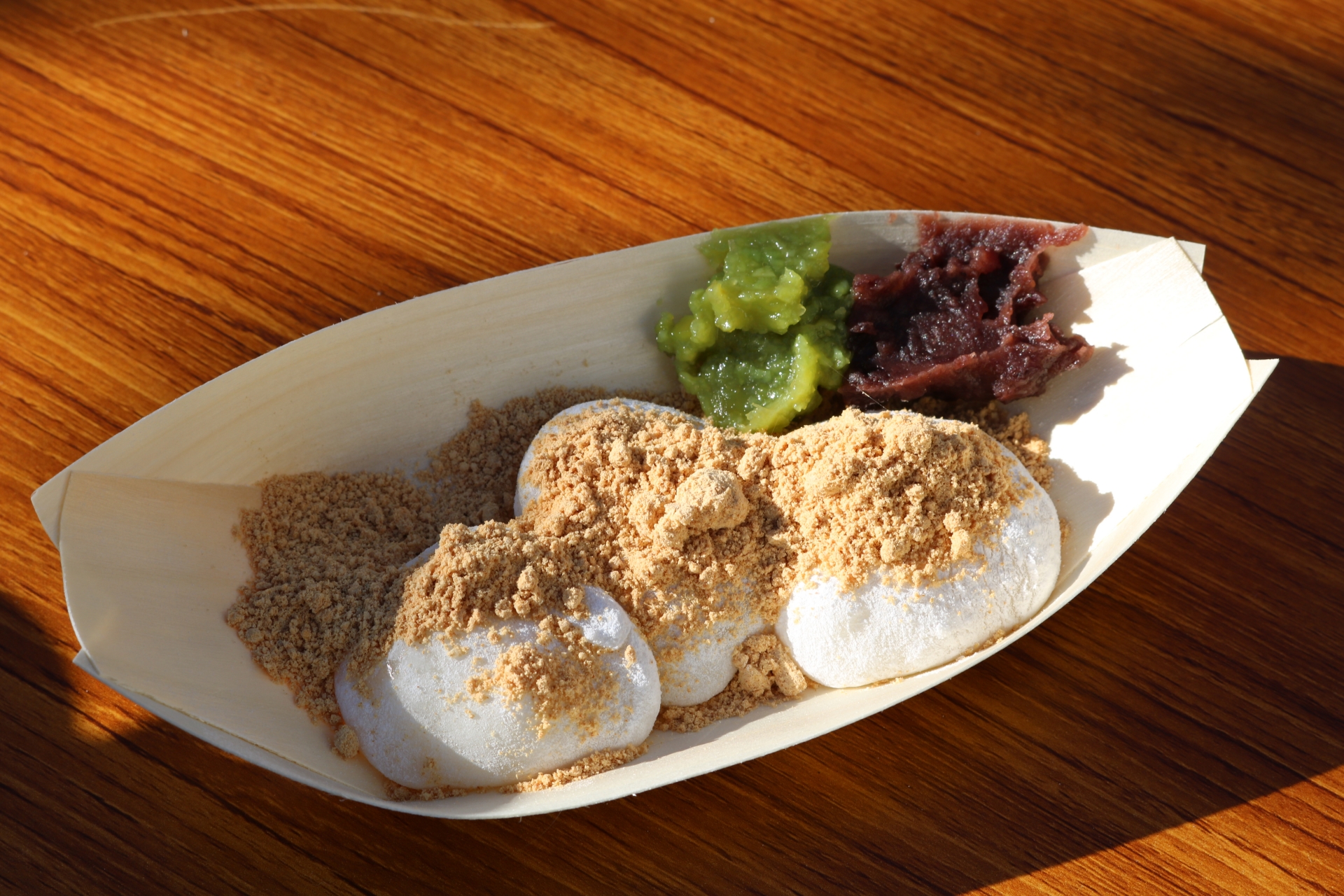
For sweet options, mochi is often enjoyed with various sweet bean pastes or powders:
Anko Mochi: A paste made from boiled azuki(red beans), seasoned with sugar and a pinch of salt.
Kinako Mochi: A powder made from roasted soybeans, seasoned with sugar and a pinch of salt. This is my personal favorite among the sweet options—it has a simple, subtle, and truly delightful flavor.
Zunda Mochi: A sweet paste made from boiled and mashed edamame(green soybeans), sweetened with sugar and a pinch of salt.
Oshiruko: Mochi is placed in a hot, sweet soup made from azuki beans—a perfect winter dessert.
Savory Mochi
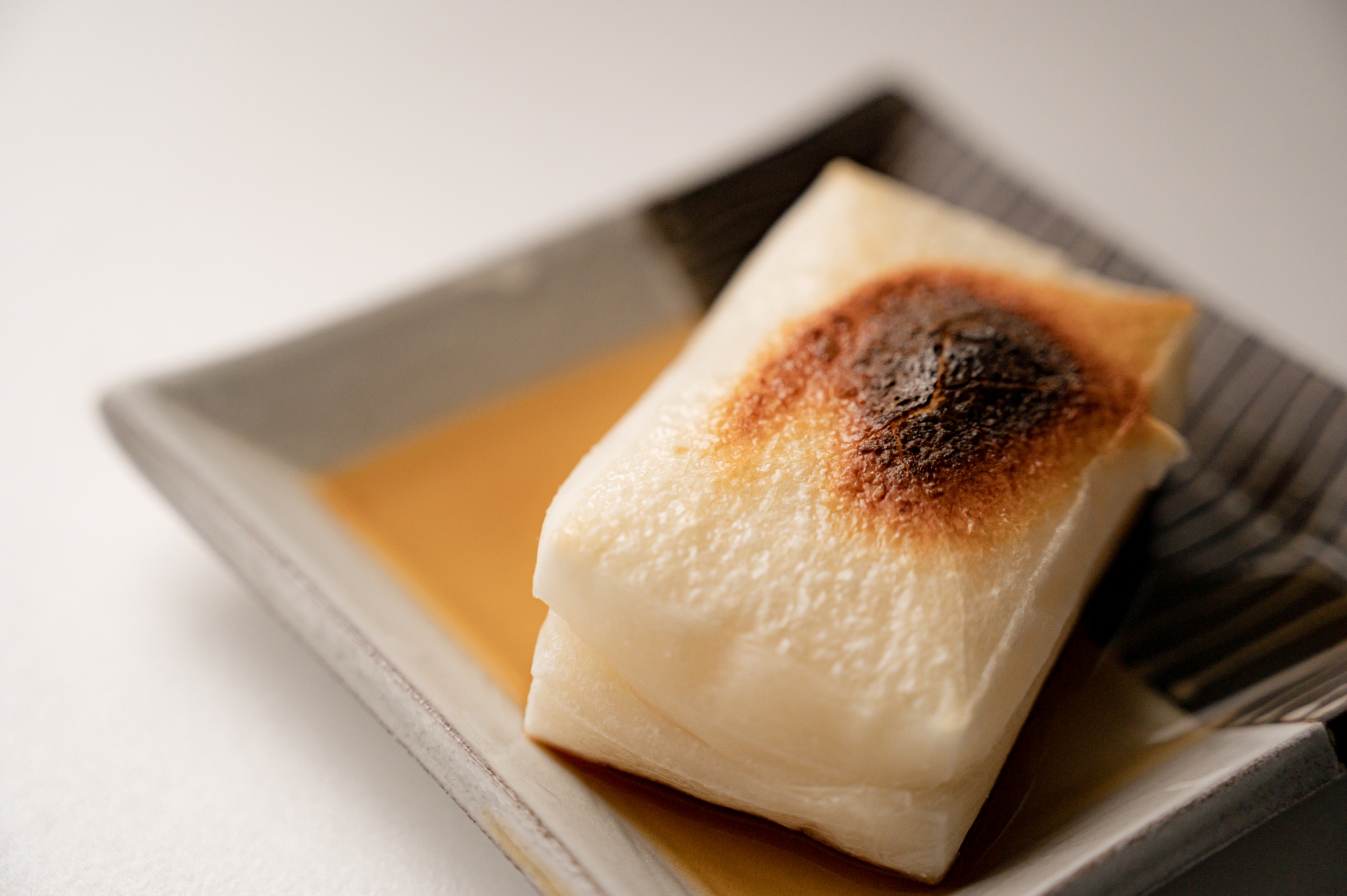
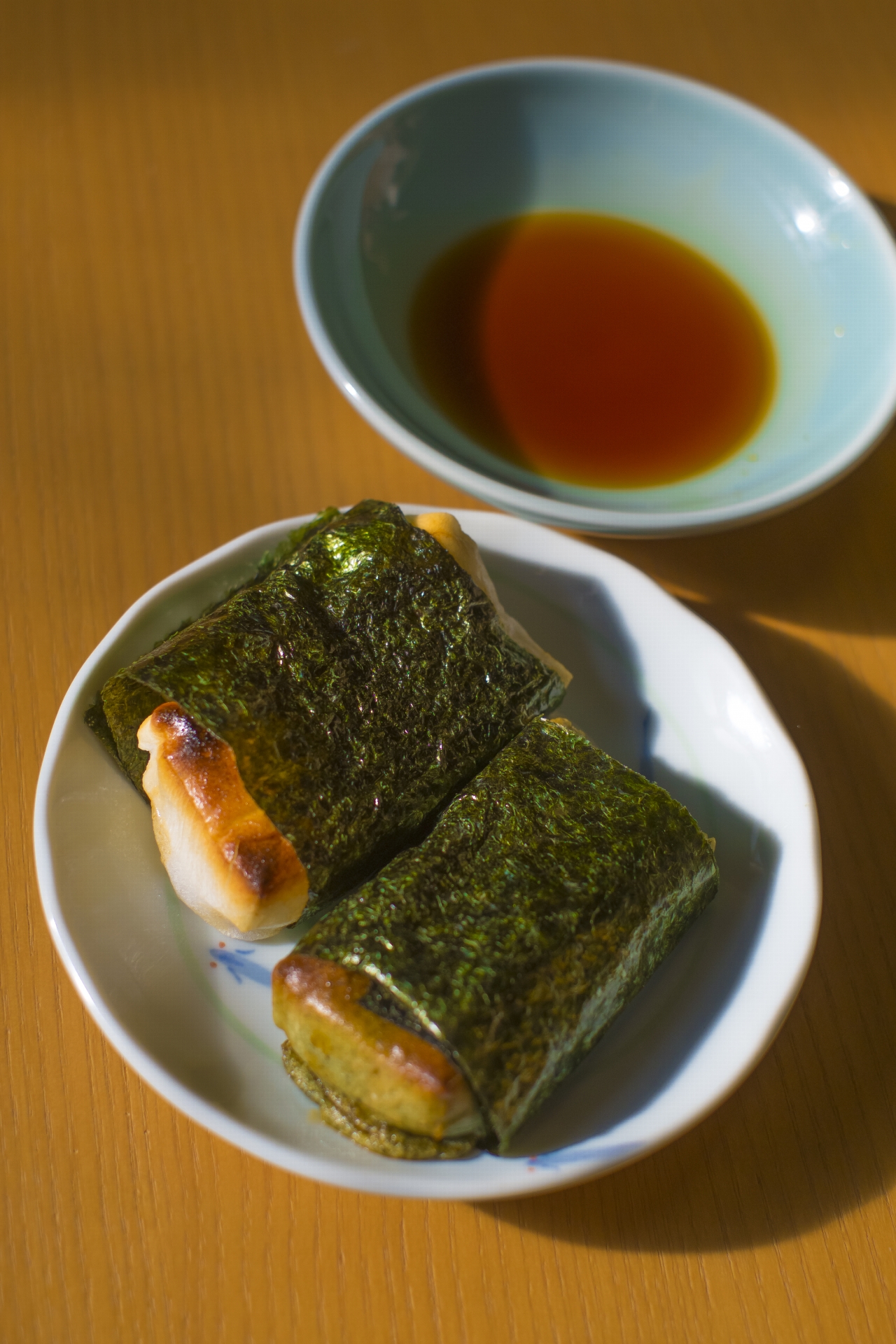
Isobe Yaki: Grilled mochi dipped in soy sauce and wrapped in a crisp sheet of dried seaweed(nori).
Karami Mochi: Mochi served with grated daikon(Japanese radish) seasoned with soy sauce. Because the daikon has a slightly spicy kick, it is called karami mochi(spicy mochi).
Ozōni: A dish frequently eaten on New Year’s Day. It is a soup, often soy sauce-based, containing vegetables, meat, and of course, mochi. The vegetables, meat, and flavor of the soup vary greatly by family and region. I absolutely loved the Ozōni my grandparents used to make!
My Favorite Way to Eat Mochi
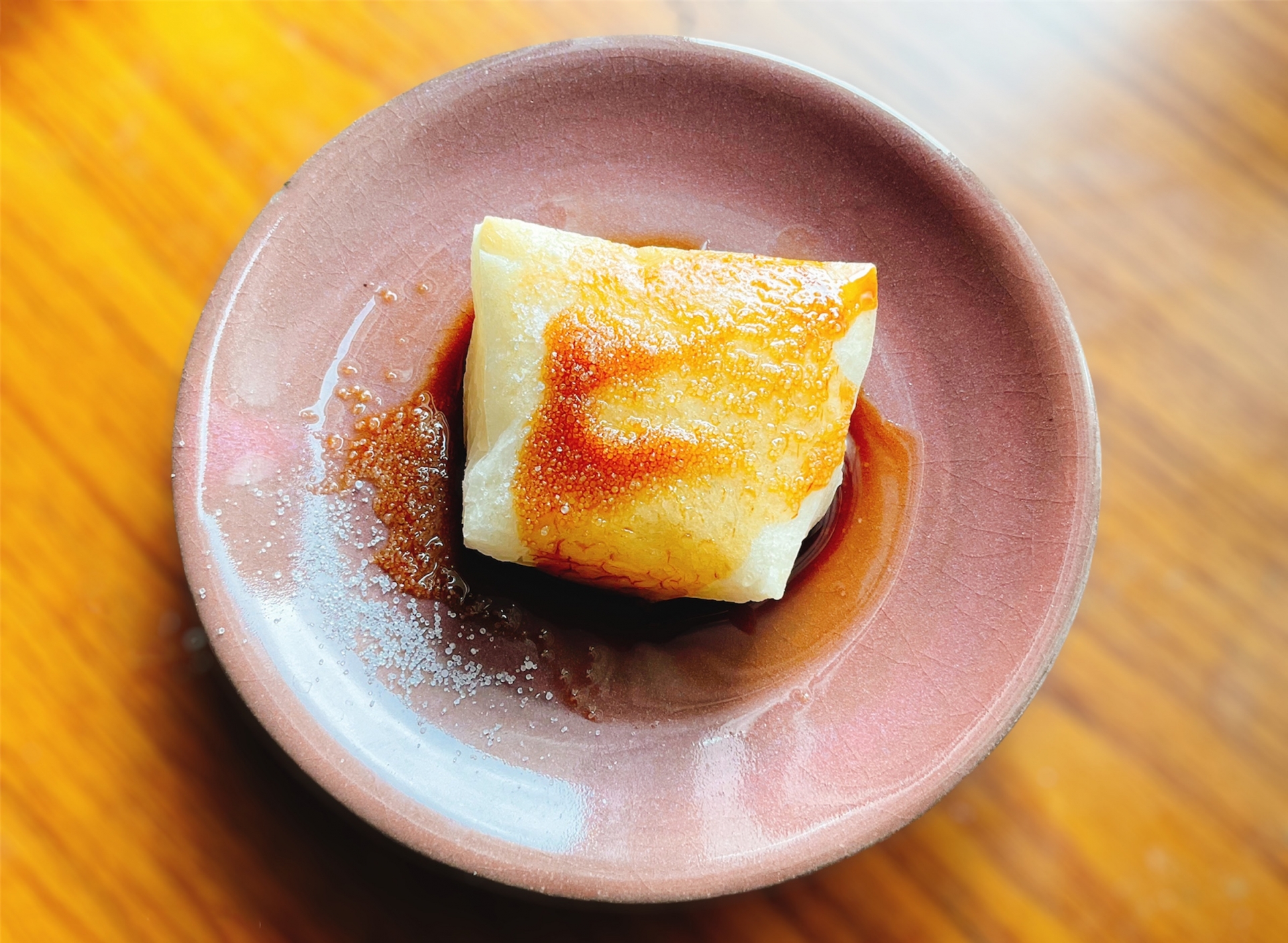
My most favorite way to eat mochi is with sato joyu(Sugar Soy Sauce). As the name suggests, you simply mix sugar into soy sauce and dip the toasted mochi into it. It doesn’t sound that impressive in writing, but I love the salty-sweet flavor combination! I also love mochi lasagna! This recipe swaps the pasta sheets for mochi. The combination of cheese, tomato sauce, and the chewy mochi is a match made in heaven, and it’s one of my favorite fusion dishes.
Enjoy the New Year’s mochi!
Mochi is wonderful whether sweet or savory, and the dried variety also serves as a long-lasting, convenient preserved food, as it can be quickly prepared just by grilling.
However, mochi is very sticky and requires a lot of chewing. Because of the risk of choking, please be very careful when eating it. Always cut mochi into small pieces and chew thoroughly before swallowing, especially when serving it to small children or the elderly, who may have difficulty swallowing.
I highly encourage you to try mochi during the New Year period and discover your own favorite way to enjoy this unique and traditional Japanese food!
Junko Mikami
Junko was born and raised in Kanagawa Prefecture. She spent about three years working and traveling in New Zealand and Australia, followed by trips to North America, Southeast Asia, and Northern Europe. Living abroad made her appreciate Japanese food and culture even more. She now lives in Tokyo, Japan with her American husband.